Exposed Aggregate Driveway Sealing in Mandurah — The Complete Guide for Peel Region Homeowners
Exposed aggregate driveways are one of the most popular choices for Mandurah and Peel Region homes — and for good reason. They look stunning, they're slip-resistant, and they handle our coastal conditions well. But without proper sealing, that beautiful pebbled surface turns black with mould, soaks up oil like a sponge, and starts to look worn within a couple of years. This guide covers everything you actually need to know about exposed aggregate driveway sealing in Mandurah — what it costs, which finish to choose, how long it lasts, and why the cleaning step matters more than most people realise.
Why Does Exposed Aggregate Need Sealing in the First Place?
Exposed aggregate concrete is beautiful precisely because of its texture — but that same texture makes it extremely porous. The gaps between the stones and the concrete matrix act like tiny reservoirs, absorbing everything they come into contact with.
In Mandurah and the Peel Region specifically, unsealed exposed aggregate faces three particular enemies:
- Black mould and algae: Our humid coastal climate means mould spores are constantly in the air. An unsealed driveway gives them deep, moist pockets to colonise. Within one to two winters, a beautiful cream-coloured aggregate driveway can turn almost completely black.
- Oil and grease: Once motor oil soaks into unsealed concrete it bonds with the porous surface. By the time you see the stain, it has already penetrated several millimetres deep — often permanently. Sealing creates a barrier that keeps oil sitting on the surface where it can be wiped away.
- Bore water iron staining: This is the one most Perth and Mandurah homeowners don't think about until it's too late. If your reticulation hits your driveway — even occasionally — the iron-rich bore water soaks straight into unsealed concrete and leaves orange staining that is extremely difficult to remove. Sealing blocks this entirely. If you already have orange staining, our bore stain removal service can treat it before we seal.
A quality sealer fills those pores and creates a tough, invisible (or gloss) barrier that repels all of the above. It also locks the aggregate stones in place, preventing them from loosening over time under vehicle traffic.
The Three Sealing Finishes — Which One Is Right for Your Driveway?
This is the question we get asked most often. There's no universally "best" finish — it depends on your surface, your aesthetic preference and how the area is used. Here's how each one works in practice for Mandurah homes:
1. Wet Look (High Gloss)
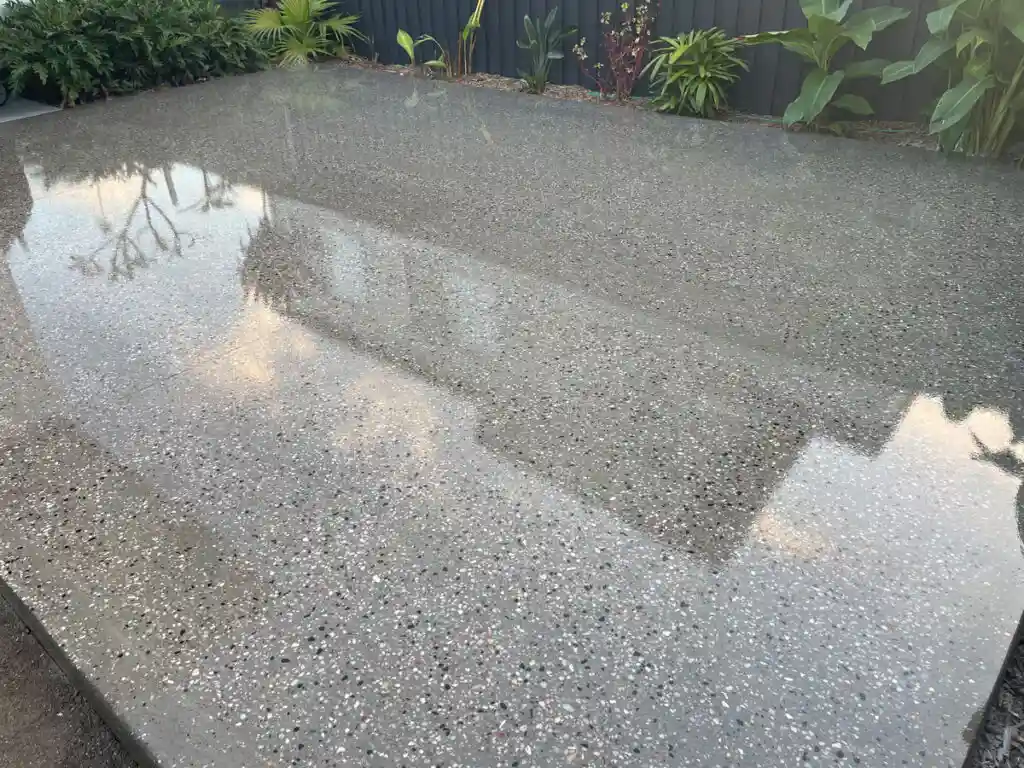
This is our most popular finish for exposed aggregate driveways across the Peel Region. A wet look acrylic sealer darkens the stone and makes the pebbles appear as though they're perpetually wet — the colours become richer and more vivid, and the overall effect is a premium, polished appearance that significantly lifts kerb appeal.
It's the finish that generates the most "wow" reactions when homeowners see their driveway transform. If your aggregate has nice colour variation — reds, creams, charcoals — a wet look sealer makes those colours pop.
Important note: We always include a non-slip grit additive in wet look sealers as standard. Without it, a gloss surface can become dangerously slippery in the rain. This is non-negotiable for us — it's part of every job.
Best for: Exposed aggregate driveways, paths and patios where you want a premium visual result.
2. Natural (Penetrating)
A penetrating sealer soaks into the concrete rather than sitting on top. It's completely invisible once applied — no sheen, no colour change, no altered appearance whatsoever. From the outside, the driveway looks exactly the same as it did before sealing.
What changes is what happens underneath the surface. The sealer chemically reacts with the concrete matrix and creates a hydrophobic barrier inside the pores, repelling water, oil and bore water staining without changing how the driveway looks or feels underfoot.
Penetrating sealers are particularly popular for pool surrounds and entertainment areas where you want protection without altering the natural look of the stone, and for homeowners who prefer a more understated aesthetic.
Best for: Pool surrounds, liquid limestone, travertine, or any area where you want to preserve the natural appearance.
3. Tinted (Colour Restore)
If your driveway is old, patchy, sun-faded or has stubborn staining that won't fully lift even after a deep pressure clean, a tinted sealer is a cost-effective way to give it a uniform, fresh appearance without re-laying.
We can mix a custom charcoal, grey or warm tone into the sealer to mask imperfections and give the entire surface a consistent colour. The end result looks like a freshly laid driveway at a fraction of the cost of replacement.
Best for: Older driveways with fading, patchy discolouration or minor staining that can't be fully removed.
The Step Most People Get Wrong — Cleaning First
This is the part of the process that separates a professional sealing job from one that fails within 12 months. You cannot seal a dirty driveway. It sounds obvious, but the consequences of skipping or rushing the cleaning step are severe.
If you apply sealer over a driveway that has oil contamination, mould, bore stain, or even just fine surface dirt, the sealer bonds to the contamination rather than the concrete. The result is patchy adhesion, white milky spots, peeling within months, and a surface that looks worse than before you started.
Our Clean & Seal package always begins with a full deep-clean process:
- Chemical degreaser pre-treatment: We apply a commercial-grade degreaser to break down any oil or grease contamination at a molecular level. This is particularly important in the garage apron area where most oil staining concentrates.
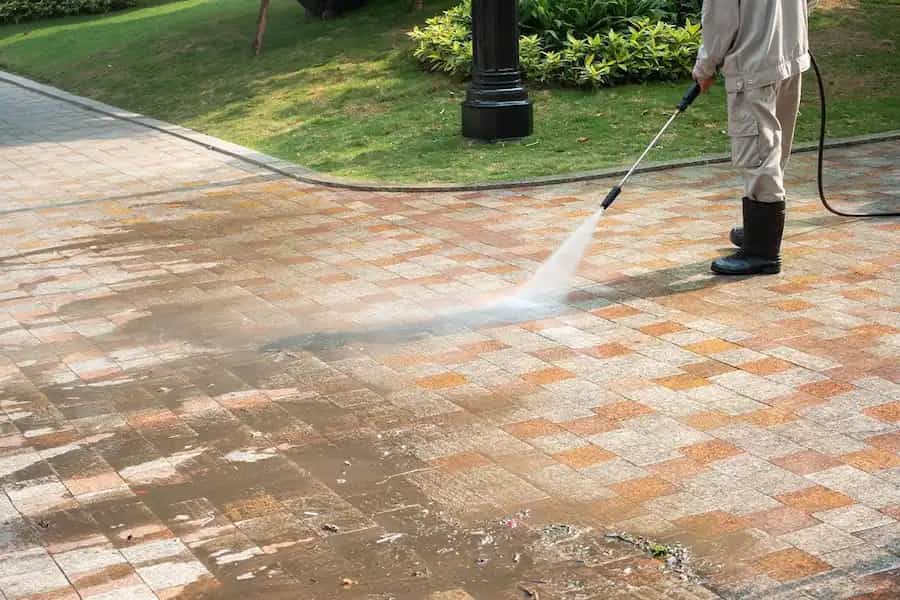
- Rotary surface pressure clean: We use an industrial flat-surface cleaner — not a wand — to deliver even, consistent pressure across the entire surface without leaving stripe marks. This strips away years of grime, mould, and surface contamination.
- Bore stain treatment (if required): If there's iron oxide staining present, we treat it chemically at this stage before sealing locks it in. See our bore stain removal page for more detail on this process.
- Full dry time: This is critical and often rushed by inexperienced operators. We allow the concrete to dry completely — moisture trapped under a sealer causes the white hazy spots that ruin the finish. In Mandurah's climate this typically means at least 24 hours of dry weather after cleaning before we apply product.
Only once the surface is completely clean and dry do we mask off garage doors, garden edges and drains, and begin the sealing application.
How Much Does Exposed Aggregate Driveway Sealing Cost in Mandurah?
This is the question everyone wants a straight answer to, so here it is:
- Single car driveway (clean + seal): From $550
- Double car driveway (clean + seal): From $750
- Patio or pool surround (clean + seal): From $500
- Seal only (already clean surface): From $350 single car
These are indicative starting prices. The final quote depends on the size of the area, the condition of the surface, whether bore stain treatment is required, and which finish you choose. We provide free, fixed-price quotes for every job across Mandurah, Halls Head, Baldivis, Lakelands, Meadow Springs, Dawesville and surrounding Peel Region suburbs — call 0435 151 877 for yours.
How Long Does Exposed Aggregate Sealing Last in WA?
The honest answer: it depends on three things — the quality of the sealer used, how well the surface was prepared beforehand, and how much traffic and sun the surface receives.
With a commercial-grade acrylic sealer properly applied to a thoroughly cleaned surface, you can expect:
- Driveways with regular vehicle traffic: 2–3 years before a re-seal is recommended
- Patios and foot-traffic-only areas: 3–5 years
- Pool surrounds with penetrating sealer: 4–6 years
Mandurah's intense UV and hot summers do accelerate sealer breakdown compared to cooler climates — this is why we use UV-stable commercial-grade products rather than hardware store sealers, which often chalk and peel within 12 months in our conditions.
We offer a 3-year warranty on qualifying sealing jobs. If the sealer fails or peels within the warranty period due to product or application issues, we return and fix it at no charge.
How Do You Know When Your Driveway Needs Re-Sealing?
There's a simple test you can do right now. Pour a small amount of water onto your driveway surface. If it beads up and sits on top — your sealer is still active and doing its job. If it soaks straight in within a few seconds — your sealer has broken down and the surface is unprotected.
Other signs it's time to re-seal:
- The surface is starting to look dull or faded compared to when it was first sealed
- You can see oil stains starting to soak in rather than sitting on the surface
- Green algae or black mould is starting to appear in patches
- The gloss finish has gone flat or chalky in areas of high sun exposure
- It's been more than 3 years since the last seal
Can You Seal an Exposed Aggregate Driveway Yourself?
Technically yes — hardware stores sell concrete sealers. But there are a few things worth knowing before you go down that path.
Consumer-grade sealers are significantly thinner than commercial products and typically last 12–18 months in WA conditions before breaking down. The application process is also more technical than it looks — applying too much product, missing the right weather window, or sealing before the concrete is completely dry all cause the milky white haziness that is very difficult to fix after the fact.
The prep work is also beyond most homeowners — a domestic pressure washer simply doesn't deliver enough consistent pressure to properly clean the pores of the concrete before sealing. If you seal over a surface that hasn't been properly cleaned at depth, you lock the contamination in.
For a job that lasts and comes with a warranty, a professional clean and seal service is genuinely the better value over a 3–5 year horizon.
💡 The Clean & Seal Package
Our most popular service for Mandurah homeowners combines a deep rotary pressure clean with a 2-coat professional sealer application in a single visit. We handle everything from degreaser pre-treatment through to the final non-slip grit coat — and back it with a 3-year warranty on qualifying jobs.
Frequently Asked Questions — Exposed Aggregate Sealing in Mandurah
How soon after a new driveway is laid can it be sealed?
New concrete needs to cure fully before sealing — typically 28 days minimum. Sealing too early traps moisture in the slab and causes bonding issues. Some concreters apply a curing compound during the pour which also needs to fully break down before a topical sealer is applied. If you're unsure, ask your concreter or give us a call and we can advise based on the age and condition of your slab.
Does sealing make the driveway slippery?
A wet look gloss sealer can reduce traction if applied without a non-slip additive. We include a grit additive in every gloss application as standard — this creates a micro-textured surface that provides grip underfoot and under tyre even in the rain. Penetrating sealers don't affect surface texture at all.
Can bore water staining be sealed over?
No — and this is important. Sealing over orange bore staining locks it in permanently. The iron oxide needs to be chemically dissolved and fully removed before sealing. We always check for bore staining during our pre-clean assessment and treat it before any sealer goes down. See our bore stain removal service for more on this.
Do you service my suburb?
We service all of Mandurah and the Peel Region including Halls Head, Baldivis, Meadow Springs, Lakelands, Dawesville, Pinjarra, Madora Bay, Falcon, Silver Sands and surrounding suburbs. Call 0435 151 877 to confirm availability in your area.