How Long Does Driveway Sealing Last in WA? (The Honest Answer)
Most generic guides quote 3–5 years for driveway sealing. In WA's conditions, that range needs some qualification. Here's the honest breakdown for Mandurah and Peel Region homeowners — including the specific factors that make sealing last longer, and the ones that cut it short well before the 3-year mark.
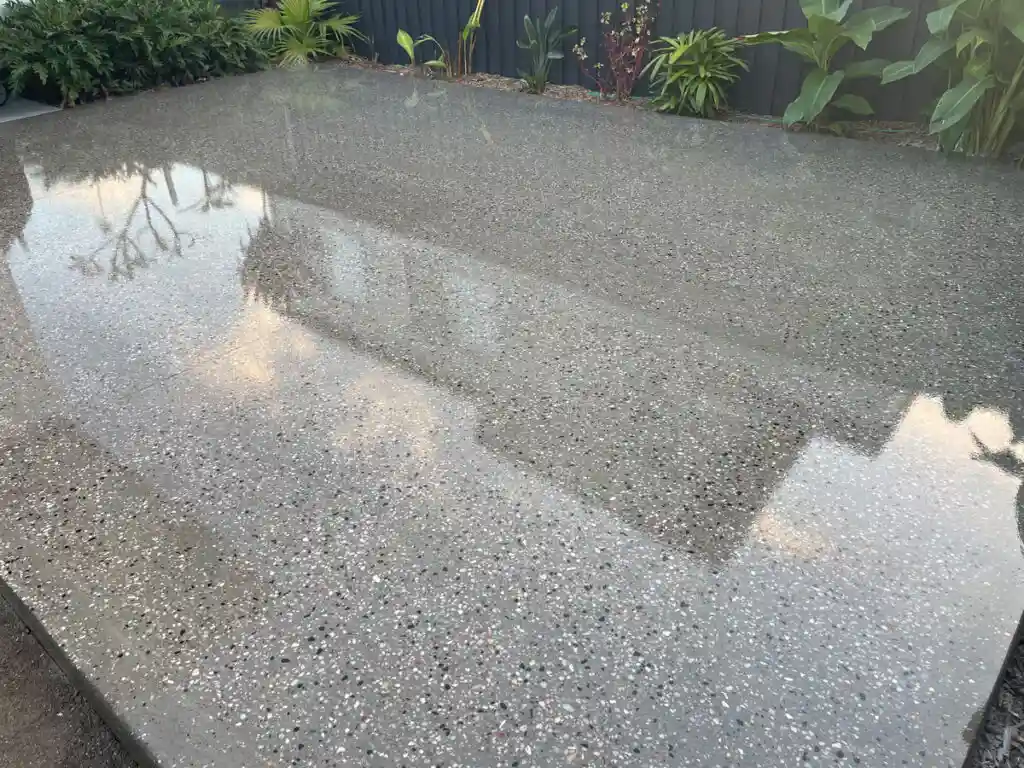
The Short Answer — What to Expect in WA
For most Mandurah and Peel Region driveways sealed professionally with commercial-grade product:
- Exposed aggregate driveways: 2–3 years before re-sealing is recommended
- Liquid limestone patios and pool surrounds: 3–5 years with a penetrating sealer
- Grey concrete paths and driveways: 2–3 years
- Paver and brick areas: 2–4 years depending on traffic and sun exposure
These ranges assume commercial-grade sealer properly applied to a thoroughly cleaned surface. Hardware store consumer sealers in WA conditions typically last 12–18 months before breaking down visibly — less than half the lifespan of a professional application.
Why WA's Conditions Are Harder on Sealers Than Most of Australia
UV Radiation
WA has some of the highest UV radiation levels in the world. Perth and Mandurah regularly record UV Index levels of 12–14 in summer — the "Extreme" category — for extended periods. UV radiation breaks down the polymer chains in acrylic sealers, causing them to chalk, fade and lose adhesion. A sealer that lasts 4–5 years in Melbourne or Sydney will typically last 2–3 years in WA before showing the same level of breakdown.
This is one of the main reasons we use UV-stable commercial-grade sealers rather than standard hardware store products. The UV stabilisation significantly extends effective lifespan in our conditions.
Coastal Salt Air
Salt air from the Indian Ocean and the Peel-Harvey Estuary affects properties throughout the 6210 and surrounding postcodes. Salt crystals that settle on a sealed surface act abrasively, and salt that penetrates any gaps or thinly-applied sections of sealer accelerates breakdown of the bond between the sealer and the concrete substrate.
Properties within about 5km of the coast or estuary — particularly in Dawesville, Madora Bay, Silver Sands and waterfront Mandurah — will generally find their sealer at the shorter end of the lifespan range.
Bore Water Iron Staining
This is the Mandurah-specific factor most sealing guides ignore entirely. Iron-rich bore water from reticulation systems deposits iron oxide on unsealed concrete — but it also attacks sealer over time. The iron compounds in bore water are mildly acidic and gradually break down acrylic sealer chemistry with repeated exposure, causing yellowing, orange tinging and eventually adhesion failure in zones where retic regularly hits.
This is why we always recommend adjusting retic heads away from sealed surfaces after every job. For heavily bore-water-affected areas, see our post on bore water stain removal in Baldivis — treatment before sealing is essential.
What Makes Sealing Fail Early — The Five Most Common Causes
The single biggest variable in how long a seal lasts isn't the product — it's the preparation. We see sealers fail within 12 months regularly, and in almost every case the cause is one of the following:
1. Surface Was Not Properly Cleaned Before Sealing
Sealer bonds to concrete. If there is oil contamination, mould residue, bore staining, old sealer flakes or even fine surface dust between the sealer and the concrete, the sealer bonds to the contamination instead of the substrate. The result is adhesion failure — peeling, blistering or white milky patches, often within weeks. A deep chemical clean is not optional. It's the foundation everything else rests on. Our Clean & Seal package always starts here.
2. Sealing Over Moisture
Concrete must be completely dry before sealer is applied — at least 24–48 hours of dry weather after pressure cleaning. Sealing over even slightly damp concrete traps moisture under the film, causing the white haze or "blushing" that permanently ruins the finish. There's no fix short of stripping and reapplying.
3. Consumer-Grade Product in WA Conditions
Hardware store sealers use lower polymer concentrations and break down noticeably within 12–18 months in WA's UV intensity. Commercial-grade UV-stable acrylic sealers cost more per litre but last two to three times longer in our conditions — significantly better value over a 5-year horizon.
4. Single Coat Application
One coat is not sufficient. The first coat partially absorbs into the open pores — it seals, but without enough film thickness to withstand traffic and UV over time. Two coats are the minimum for durable results. We apply two coats as standard on every job.
5. High-Traffic Wear Zones
Tyres — particularly in the turning and braking zones near the garage door and kerb edge — accelerate sealer breakdown in those spots. It's normal for these areas to show wear before the main driveway body. Spot re-sealing of these zones can extend the overall job life without a full redo.
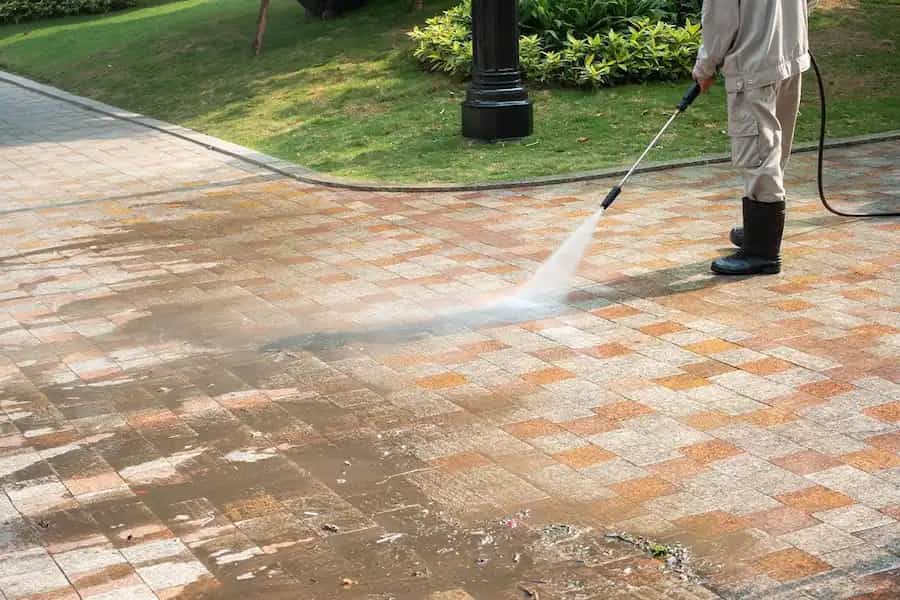
The Water Bead Test — How to Know When Your Seal Has Gone
You don't need to count years to know if your sealer needs attention. Pour a small amount of water onto your driveway surface in several spots. Then watch:
- Water beads and sits for 60+ seconds: Sealer is active and working. No action needed yet.
- Water beads initially but soaks in within 30–60 seconds: Sealer is thinning. Plan for re-sealing within 6–12 months.
- Water soaks straight in within a few seconds: Sealer has broken down. The surface is unprotected — re-sealing is due now.
Test in several spots, especially near the garage door and at the kerb where wear starts first. Breakdown is usually uneven and typically begins in high-traffic and high-sun zones before spreading.
Is Sealing Worth It in the First Place? The Numbers
The value calculation is straightforward. An exposed aggregate driveway in Mandurah that is never sealed typically needs a full pressure clean every 12 months to stay presentable — oil, mould and bore water soak into the open pores and cause rapid, visible staining. At $200+ per clean, that's $1,000+ over five years in cleaning costs alone, with the driveway still unprotected and concrete gradually absorbing more contaminants into its structure.
The same driveway professionally sealed needs one clean and seal every 2–3 years. At $550 for a clean and seal, that's approximately $275 per year — less than half the cost of annual cleaning, with the surface actually protected from the contamination that causes long-term concrete degradation.
Over a decade, a sealed driveway is cheaper, looks better, and the concrete is in significantly better condition. The compounding benefit of keeping the pores closed — no oil penetration, no bore water iron staining, no mould rooting into the surface — means the concrete itself lasts longer before any repair or resurfacing is needed.
How to Get the Most Out of Your Sealed Driveway
- Adjust retic heads away from the sealed surface. Even occasional bore water contact accelerates breakdown in those zones. A 10-degree adjustment costs nothing.
- Clean oil drips promptly. On a sealed surface, fresh oil sits on top and wipes up easily. Left for months, it works through the seal in heavy drip zones.
- Rinse occasionally with fresh water. A gentle hose-down every few weeks removes salt accumulation — particularly important for coastal properties.
- Avoid acid-based cleaners. They strip acrylic sealers rapidly. Use pH-neutral products only if you need to remove a stain between professional cleans.
- Re-seal before it fully fails. Applying a new coat over existing sealer that's thinning but not yet failed is easier, cheaper and more effective than waiting until full breakdown.
🛡️ Our 3-Year Warranty
We back our professional sealing work with a 3-year warranty on qualifying jobs. If the sealer fails or peels within the warranty period due to product or application issues, we return and fix it at no charge.
See our concrete sealing service → or call 0435 151 877 for a free quote across Mandurah, Halls Head, Baldivis and the Peel Region.
Frequently Asked Questions — Driveway Sealing Longevity in WA
How long does exposed aggregate sealing last in Mandurah?
With commercial-grade UV-stable sealer professionally applied to a properly prepared surface, exposed aggregate sealing in Mandurah typically lasts 2–3 years. Coastal and waterfront properties may be at the shorter end due to salt air. Consumer hardware store sealers typically last 12–18 months in WA conditions.
How do I know when my driveway sealing needs redoing?
The water bead test is the most reliable indicator — pour water on the surface and if it soaks in quickly rather than beading up, your sealer has broken down. Other signs include a dull or chalky appearance, oil stains soaking in, or the onset of algae and mould patches.
Why did my driveway sealing start peeling within a year?
Early sealer failure almost always comes down to surface preparation — sealing over oil contamination, applying before concrete was completely dry, using consumer-grade product, or applying only a single coat. If this has happened, the failed sealer needs stripping before a new application — resealing over failed sealer doesn't work.
Does liquid limestone sealing last as long as exposed aggregate?
With a penetrating sealer, liquid limestone actually lasts longer — typically 3–5 years — because the sealer soaks into the stone rather than forming a surface film. We use penetrating sealers on all liquid limestone and travertine applications for this reason.
How much does re-sealing a driveway cost in Mandurah?
Re-sealing a single car driveway in Mandurah starts from $350 for seal only on a surface in good condition. Our Clean & Seal package starts from $550 and includes a full deep pressure clean plus 2-coat sealer application. Free fixed-price quotes for all jobs — call 0435 151 877.
Is it worth sealing a driveway in Mandurah?
Yes — the cost over time is significantly lower than annual cleaning of an unsealed surface, and the concrete is actually protected from long-term degradation. See the numbers breakdown above for the full comparison.