Soft Washing vs Pressure Washing — Which Does Your Mandurah Home Actually Need?
If you've started looking into getting your home cleaned professionally, you've probably come across both "soft washing" and "pressure washing" and wondered what the difference actually is — and more importantly, which one your property needs. The honest answer is: both, depending on what you're cleaning. Using the wrong method on the wrong surface is one of the most common and costly mistakes homeowners make. This guide explains exactly which method is right for every surface on a typical Mandurah or Peel Region home.
What Is the Actual Difference?
At the most basic level, the difference is simple:
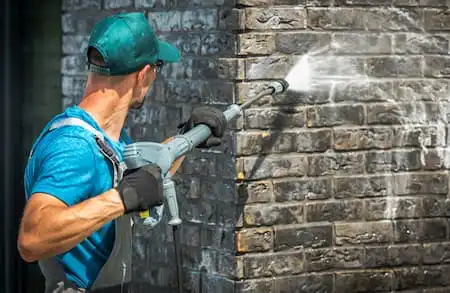
- Pressure washing uses high-force water — typically 2,000–4,000 PSI — to physically blast contamination off hard, durable surfaces. The force does the cleaning work.
- Soft washing uses low-pressure water — equivalent to a garden hose — combined with biodegradable cleaning solutions that chemically kill and dissolve mould, algae and bacteria. The chemistry does the cleaning work, not the force.
That distinction matters enormously when you consider the variety of surfaces on a typical Mandurah home — rendered walls, Colorbond roofing, tiled roofs, exposed aggregate driveways, liquid limestone pool surrounds, eaves, weatherboard, pavers, limestone retaining walls. Each of these surfaces has completely different tolerances for pressure. Using the wrong method doesn't just produce a poor result — it can cause permanent damage that costs thousands to repair.
Why Mandurah's Conditions Make This Especially Important
Homes in Mandurah and the Peel Region face a unique combination of cleaning challenges that don't exist in most other parts of Australia:
- Coastal salt spray — constant salt air from the Indian Ocean and the estuary crystallises on render, window frames and eaves. Salt etches into surfaces over time and needs chemical neutralisation, not just force.
- High humidity and mould growth — our warm, humid winters create ideal conditions for Gloeocapsa Magma (black algae) and green mould on roofs, walls and limestone. These biological growths have root systems that anchor into surfaces — blasting them with pressure removes the visible growth but leaves the roots behind, causing rapid regrowth. Soft wash kills them completely.
- Porous surfaces everywhere — rendered walls, limestone retaining walls, liquid limestone pool surrounds and terracotta tiles are all extremely porous and soft. High pressure physically chips, pits and destroys these surfaces.
- Bore water iron staining — iron oxide from reticulation doesn't respond to pressure at all. It requires chemical treatment. See our guide to bore stain removal in Baldivis for more detail.
The short version: Mandurah homes need both methods — but applied to the right surfaces. A professional who uses only high pressure on everything, or only soft wash on everything, isn't doing the job properly.
Surface by Surface — Which Method to Use
Here's the definitive breakdown for every surface you're likely to have on a Peel Region property:
Roof Tiles (Concrete, Terracotta, Slate) — Soft Wash Only
Why not pressure: High pressure cracks aged tiles, strips protective granules from the surface, forces water under roof laps and can dislodge ridge capping — all leading to leaks and expensive repair bills. Even many professionals use too much pressure on roofs, causing damage that won't be apparent until the next heavy rain.
Soft wash result: Biodegradable solution kills moss, lichen and black algae at the root, preventing rapid regrowth. The roof is gently rinsed clean without any structural risk. Results last significantly longer because the growth is eliminated rather than just removed from the surface.
See our dedicated roof washing service for Mandurah and the Peel Region.
Colorbond Roofing — Soft Wash Only
Why not pressure: High pressure can scratch the paint coating on Colorbond panels, void your manufacturer's warranty and accelerate corrosion. Colorbond is tough but the paint coating is not designed to withstand industrial water pressure.
Soft wash result: Salt, oxidation, spider webs and algae removed cleanly without touching the paint coating. Manufacturers often require periodic professional washes to maintain warranty validity — soft wash is the only method that qualifies.
Rendered Walls — Soft Wash Only
Why not pressure: This is the damage we see most often on Mandurah homes where a pressure washer has been used incorrectly. Acrylic texture coat render chips easily under high pressure, leaving permanent pitting and exposed concrete beneath. Older sand-and-cement render is even more vulnerable. The repair cost is significant.
Soft wash result: Green mould, algae, coastal salt and spiderwebs removed completely using a solution that kills the biological growth at the source. Completely safe for all render types at low pressure. Our house soft washing service is specifically designed for the rendered homes common throughout Mandurah and the Peel Region.
Eaves, Fascias and Soffits — Soft Wash Only
Why not pressure: Eaves and fascias are typically painted timber, aluminium or lightweight fibre cement. High pressure strips paint, forces water into timber causing rot, and can crack or dislodge soffit panels.
Soft wash result: Spiderwebs, mould and coastal grime removed safely. The Mandurah-specific benefit here is significant — our humid coastal environment breeds spiders in eaves year-round. Soft wash solution dissolves the protein in the web structure and kills the spiders at their nesting sites, giving a result that lasts months rather than days.
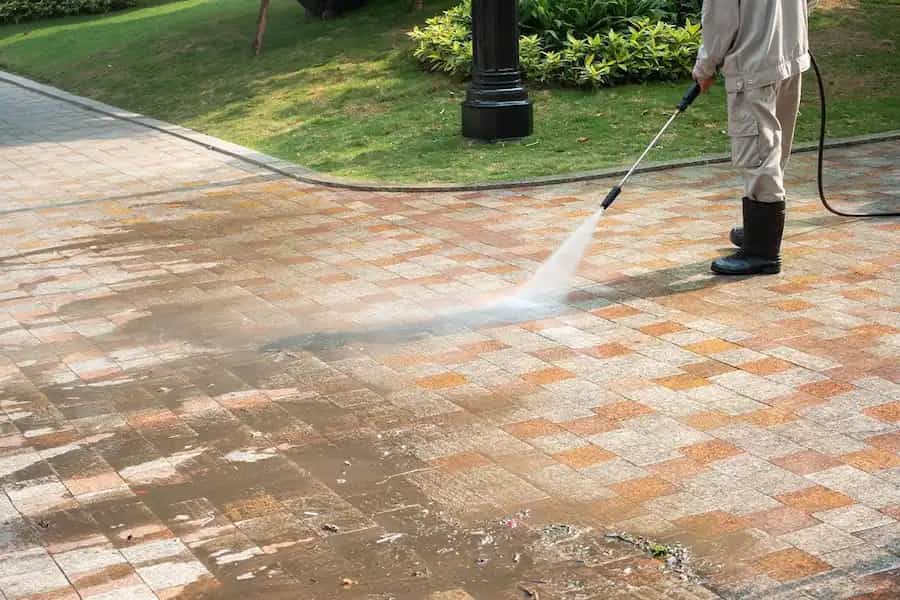
Exposed Aggregate Driveways — Pressure Wash (Done Right)
Why not soft wash alone: Driveways accumulate oil, tyre marks, heavy dirt and bore water staining that require mechanical force to fully lift. Chemical treatment alone isn't sufficient for hard, embedded surface contamination on concrete.
How it's done properly: A chemical degreaser pre-treatment is applied first to break down oil and organic growth, then an industrial rotary surface cleaner — not a wand — delivers even, consistent pressure across the entire surface without leaving stripe marks. This combination of chemistry plus pressure is what produces a genuinely clean result.
Important note: If bore water staining is present, it must be chemically treated before pressure cleaning — not after. Pressure over iron oxide staining does nothing. See our bore stain removal service for this step.
After cleaning, sealing is strongly recommended to prevent oil and mould from returning. See our concrete and driveway sealing service.
Liquid Limestone Pool Surrounds and Patios — Low-Pressure with Chemical Pre-Treatment
Why not full pressure: Liquid limestone is extremely porous and relatively soft. Full pressure blasts away the smooth top layer, exposes the aggregate, and permanently alters the surface texture. It also drives contamination deeper into the stone rather than removing it.
The right approach: A biological pre-treatment is applied to kill black mould spores deep inside the stone, allowed to dwell, then gently rinsed at low-to-moderate pressure. This removes the contamination without destroying the surface. For ongoing protection, a penetrating sealer keeps the pores closed and prevents future mould from taking hold.
Brick Pavers — Moderate Pressure with Care
The risk: High pressure can blow out the joint sand between pavers, compromising the structural integrity of the paved area and allowing weeds to establish in the gaps. It can also strip the surface texture from clay pavers.
The right approach: Moderate, consistent pressure with a flat-surface cleaner rather than a direct wand. Post-cleaning, re-sanding of joints and a sealer application locks the sand in and prevents weed growth — a popular combination for entertaining areas across the Peel Region.
Limestone Retaining Walls — Soft Wash Only
Why not pressure: Limestone is one of the softest surfaces you'll find in a WA garden. High pressure permanently destroys the smooth face of the block, creating deep pits that are even more prone to mould than the original surface. We cover this in detail in our guide to cleaning limestone retaining walls in WA.
Soft wash result: Mould and algae killed at the root and gently rinsed, preserving the block face completely.
Concrete Paths and Footpaths — Pressure Wash
Standard grey concrete is durable enough for pressure washing. A rotary surface cleaner removes dirt, mould, algae and general grime effectively. Chemical pre-treatment for any oil or bore stain contamination before the pressure clean gives the best result.
The Quick Reference Guide — Mandurah Surfaces
| Surface | Method | Why |
|---|---|---|
| Tile or Colorbond roof | Soft Wash | Pressure cracks tiles, voids Colorbond warranty |
| Rendered walls | Soft Wash | Pressure chips and pits render permanently |
| Eaves & fascias | Soft Wash | Pressure strips paint, forces water into timber |
| Limestone retaining walls | Soft Wash | Pressure destroys the soft stone face permanently |
| Liquid limestone / pool area | Soft Wash + low pressure rinse | Porous — pressure exposes aggregate and pits surface |
| Exposed aggregate driveway | Pressure Wash | Hard surface tolerates pressure — needs force for oil and grime |
| Grey concrete paths | Pressure Wash | Durable surface — pressure cleans effectively |
| Brick pavers | Moderate Pressure | Too much pressure blows joint sand out |
| Colorbond fence (bore stained) | Chemical Treatment First | Iron oxide won't respond to pressure alone |
Why Results Last Longer with the Right Method
This is the part of the comparison most homeowners don't think about until after the job is done. Pressure washing removes the visible growth from a surface — but if you're pressure washing a roof or rendered wall, you're physically blasting the mould and algae off the surface without killing the root system that anchors it into the material.
Within a season, the same mould comes straight back — because the root system was never killed. You've paid for a clean that lasted three to six months.
Soft washing's biodegradable solution kills the biological growth at the root level. There's nothing left alive to regrow from. On a treated roof, results typically last two to four years. On rendered walls, twelve to twenty-four months before any new growth appears. The upfront cost is similar — but the value over time is significantly better.
For hard surfaces like driveways where pressure washing is the right method, the longevity story is about what comes after — sealing after cleaning prevents oil and mould from returning quickly, extending the time between cleans from twelve months to two to three years.
Can You Use Both Methods in the Same Visit?
Yes — and this is actually how we approach most full-property jobs. A typical Peel Soft Wash visit to a Mandurah home involves both methods used on the appropriate surfaces:
- Soft wash for the roof, rendered walls, eaves and any limestone surfaces
- Pressure cleaning for the driveway, paths and concrete areas
- Chemical treatment for any bore staining before the pressure clean
- Optional sealing for driveways after the pressure clean
This combined approach — using each method where it's most effective — is what produces the full-property transformation result you see in before/after photos. It's also why we don't call ourselves exclusively a "pressure washing" company or exclusively a "soft wash" company. The right tool for each surface is what matters.
🧠 Not Sure What Your Property Needs?
We assess every property before quoting and advise exactly which method is appropriate for each surface. There's no obligation and no upselling — just an honest assessment of what will produce the best result for your specific home.
Call 0435 151 877 or fill in the form below for a free quote anywhere in Mandurah, Halls Head, Baldivis, Dawesville and the Peel Region.
Frequently Asked Questions
Is soft washing as effective as pressure washing?
For the surfaces it's designed for — yes, and often more so. Soft washing kills mould and algae at the root rather than just removing the visible growth, meaning results last significantly longer. For hard surfaces like driveways, pressure washing is the more effective method. The key is matching the method to the surface.
Will pressure washing damage my rendered home in Mandurah?
Yes, if applied directly to render. High pressure chips and pits acrylic texture coat and damages older sand-cement render, leaving permanent scarring. Rendered surfaces should always be cleaned with soft wash only. This is one of the most common damage scenarios we see when homeowners have used the wrong method or hired an inexperienced operator.
How long does soft washing last compared to pressure washing?
On biological surfaces like roofs and walls, soft wash results typically last two to four times longer than pressure washing because the growth is killed at the root rather than just physically removed. On driveways cleaned by pressure washing, the longevity depends heavily on whether the surface has been sealed after cleaning.
Can I soft wash my own driveway?
A driveway needs pressure cleaning rather than soft washing. Consumer pressure washers are significantly less powerful than commercial equipment and often leave uneven "zebra stripe" results. For a flat, consistent clean result on exposed aggregate or liquid limestone, a commercial rotary surface cleaner is needed. The preparation steps — degreasing, bore stain treatment — also require commercial-grade products.
Do you use both methods on the same property?
Yes — almost every full-property job involves both. Soft wash for the roof, walls, eaves and limestone. Pressure cleaning for driveways, paths and concrete. We assess each surface and apply the appropriate method. Call 0435 151 877 for a free assessment and quote across Mandurah and the Peel Region.